

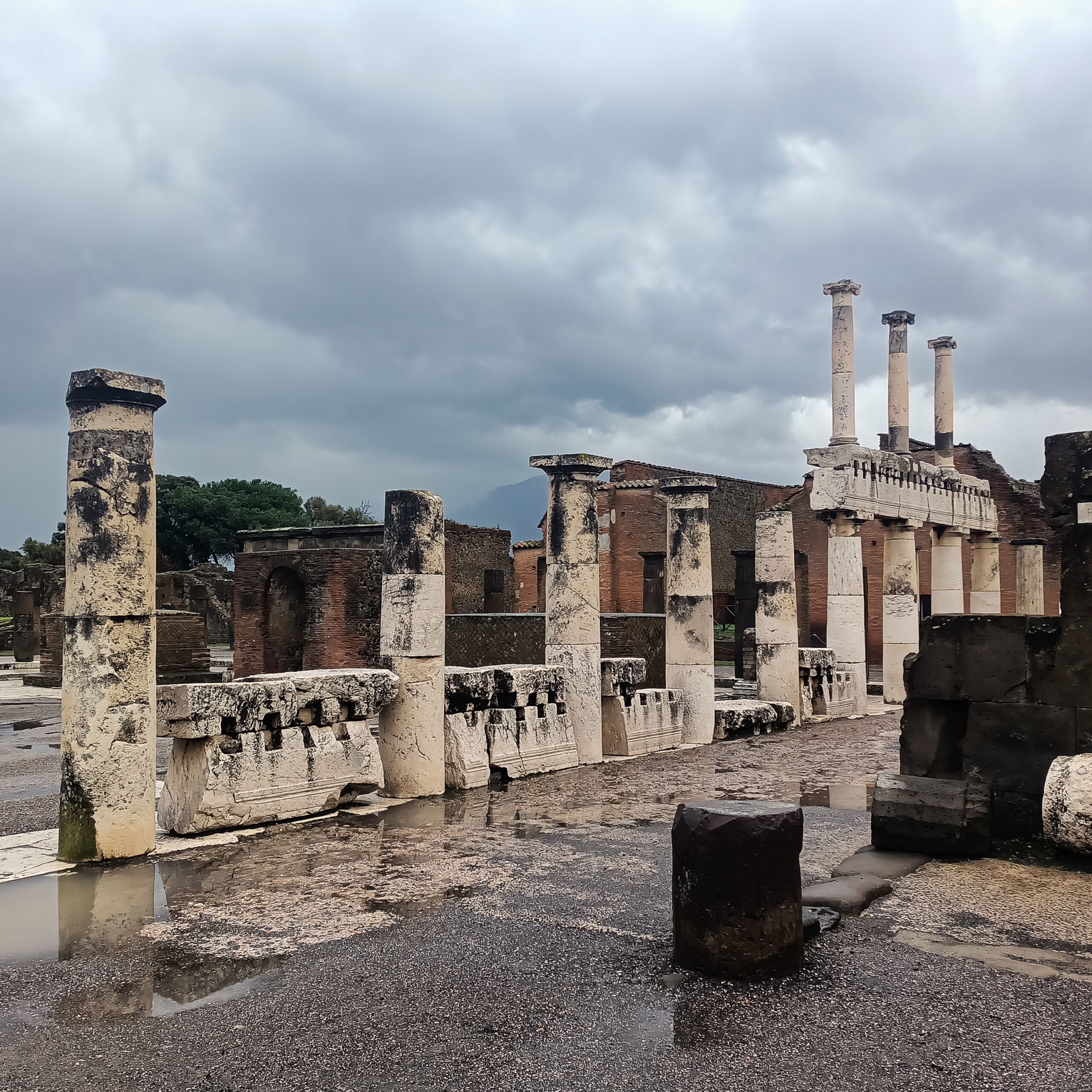
AT A GLANCE
Location Pompeii, Italy
Region Campania
Character of the place: ancient city and archaeological site
Sightseeing time: 4-6 hours
Best for: history, archaeology and ancient architecture
Official website: pompeiisites.org
My Rating: 10/10
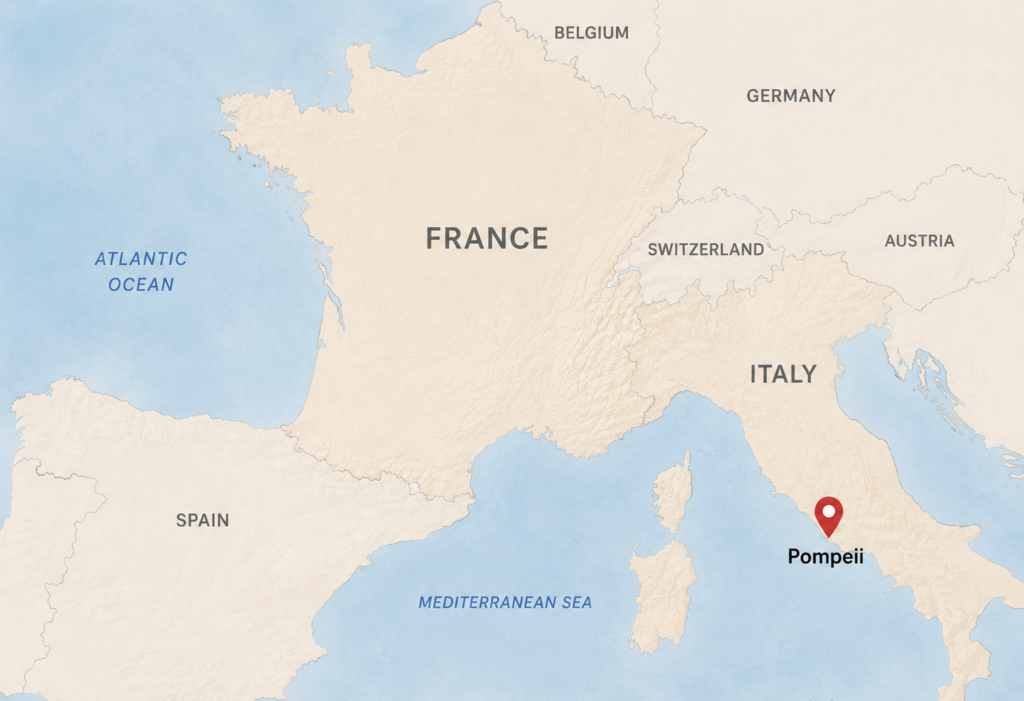
A STOP IN SCAFATI AND POMPEII WITHIN EASY REACH
Pompeii was not the destination of this trip. In December 2023, I arrived in Scafati by truck, where I was due to make a delivery. Since I had a free weekend ahead of me, as usual I started checking what interesting places there were nearby. When I saw that Pompeii was just a few kilometres away, the decision practically made itself.
There was only one question left, one that is very typical of my travels: where could I leave the truck? With a full-size truck, you cannot simply find the first car park next to a tourist attraction and turn in. Eventually, I managed to find a petrol station near Pompeii where I could safely stay for the weekend, and the entrance to the archaeological site was only about a kilometre away. It was hard to imagine a better base for exploring.
The weather did not look particularly encouraging. It was cloudy, it rained from time to time, and Pompeii in December definitely did not look like a postcard from southern Italy. Looking back, however, this had one huge advantage — there were surprisingly few people at the archaeological site. I could walk calmly along the empty streets, look inside one house after another and stop wherever something caught my attention, without having to squeeze between groups of tourists. I still had no idea then just how vast the site was or how many hours I would spend there. I knew only one thing: despite the uninviting weather, this was definitely a stop worth making.
WHY YOU SHOULD VISIT POMPEII
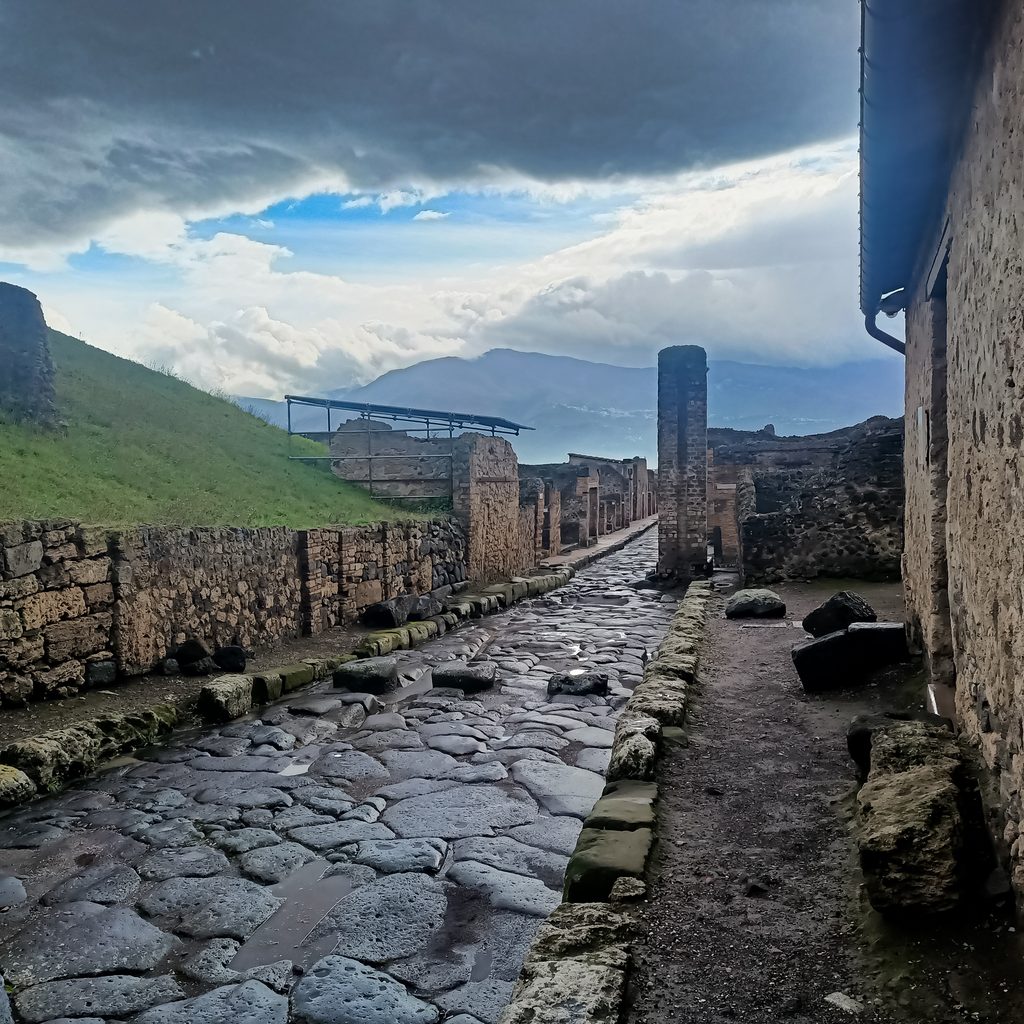
Pompeii is worth visiting above all because it is difficult to find another place where history feels so tangible. Here, you are not looking at a single ruin or just a few preserved buildings, but at entire sections of an ancient city — streets, houses, courtyards, temples, workshops and places connected with everyday life. Walking among them, it is surprisingly easy to forget that almost two thousand years have passed since people actually lived here.
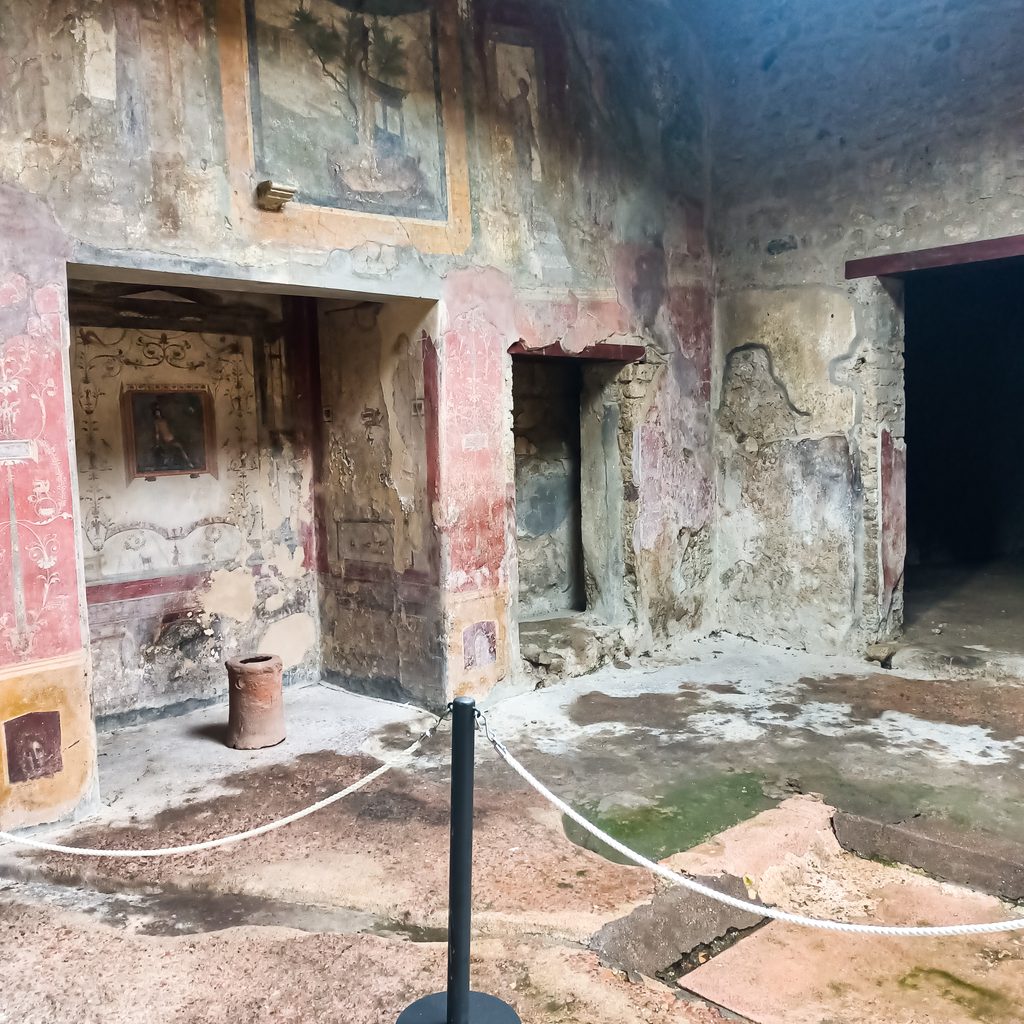
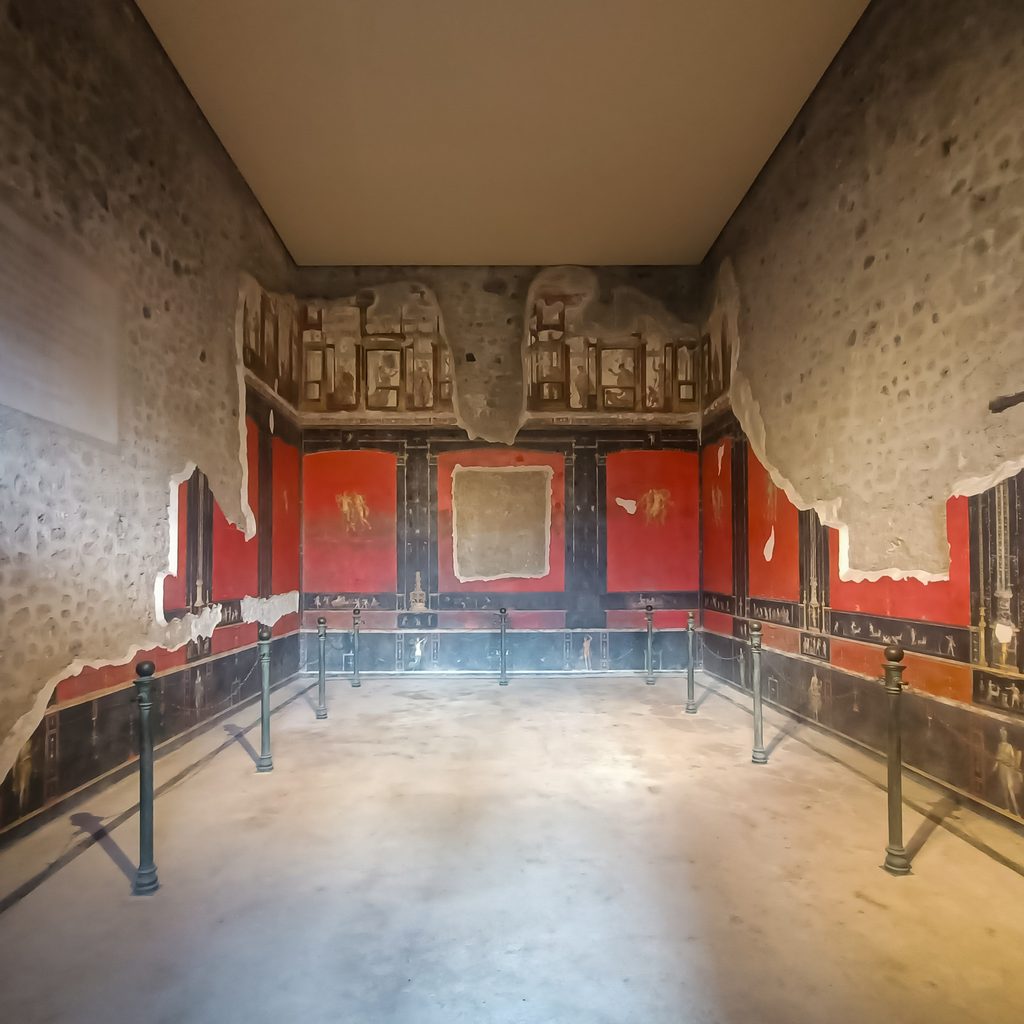
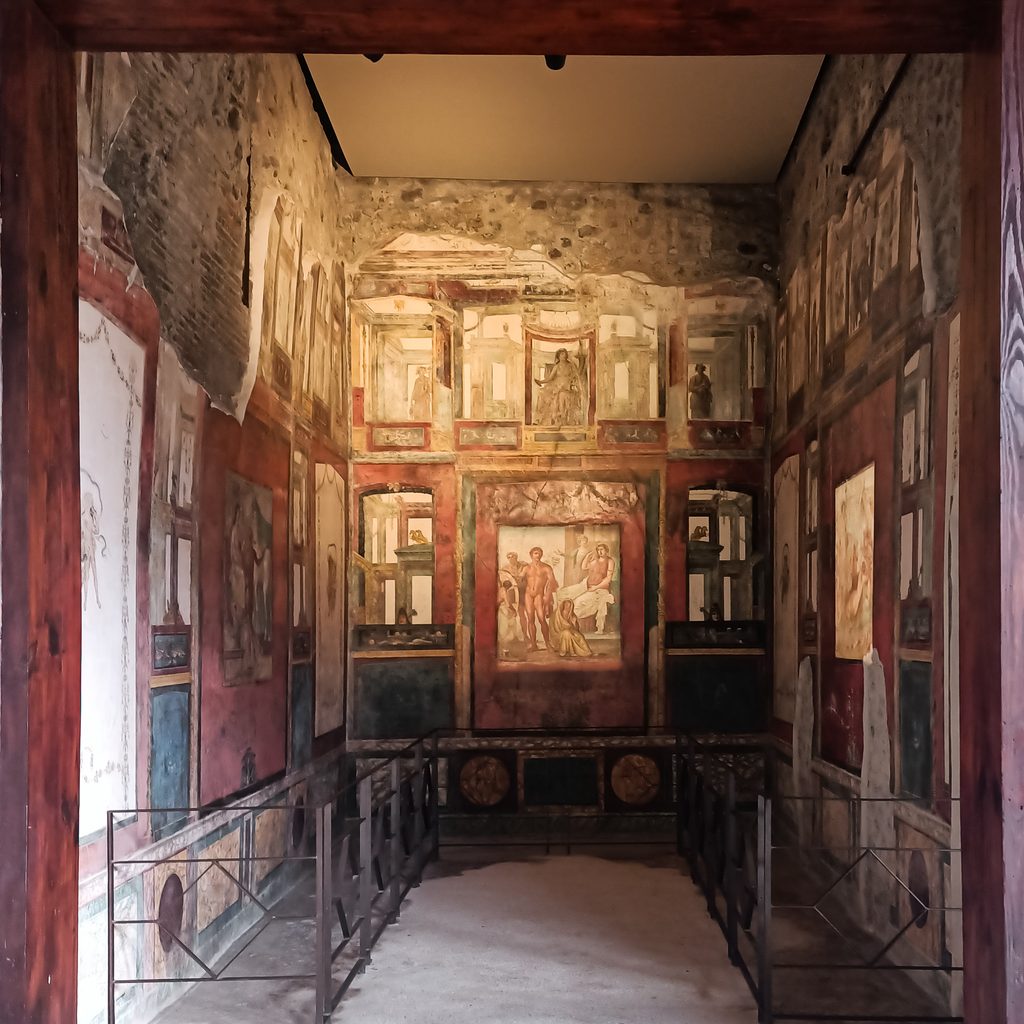
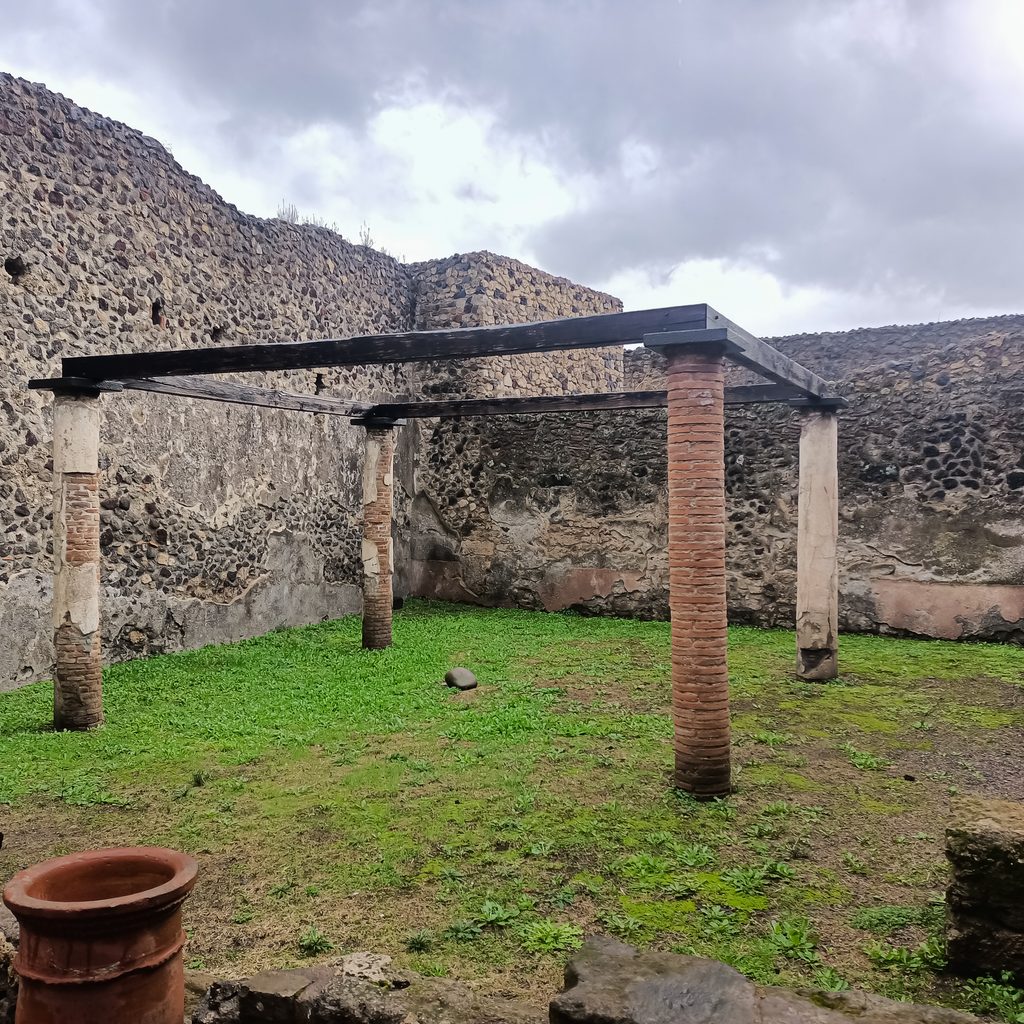
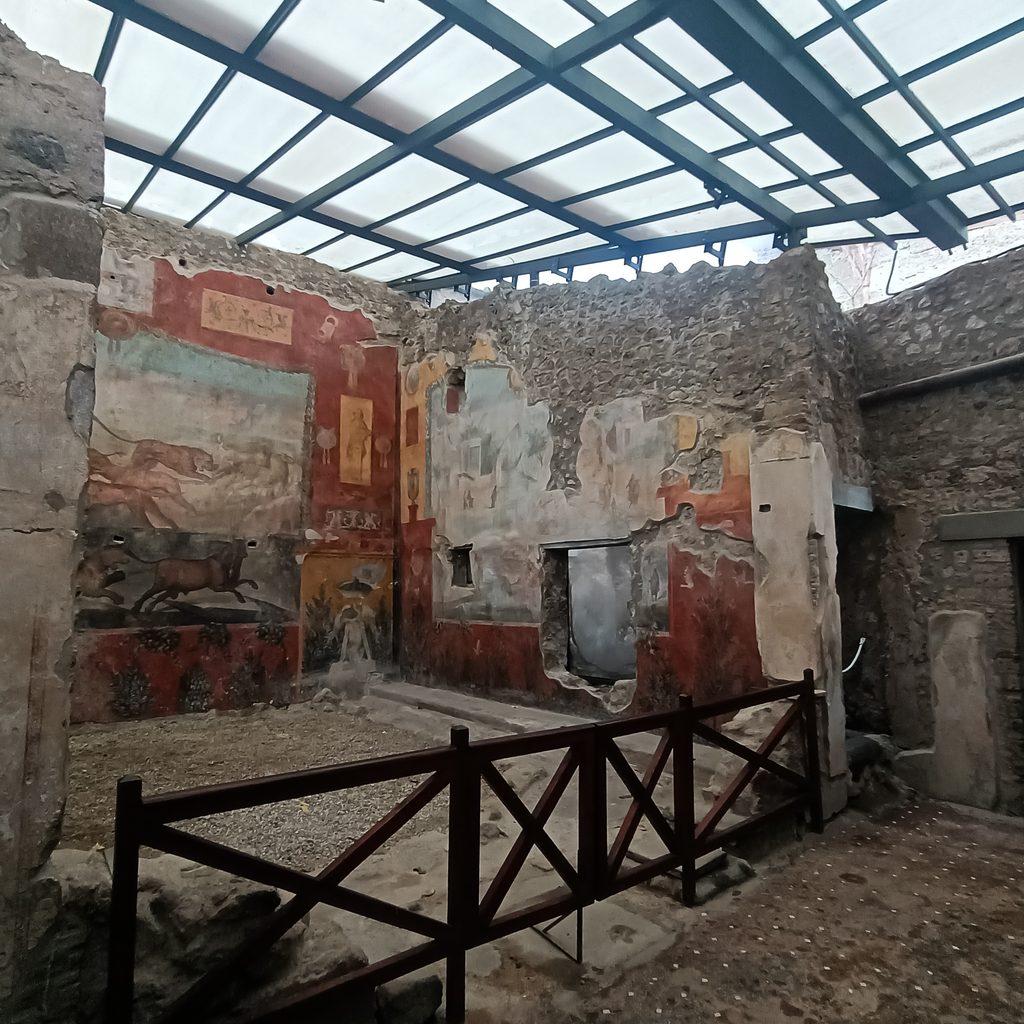
What surprised me most was how many details have survived. Preserved frescoes, fragments of decoration, stone streets and the remains of former rooms make Pompeii feel like much more than anonymous ruins. In many places, you can get the impression that someone has only just walked away, leaving everyday objects behind. It makes it much easier to imagine what life in this city must really have looked like. And I think that is exactly why Pompeii made such a strong impression on me, even though ruins themselves are not usually something that particularly fascinates me.
It is also worth allowing plenty of time for Pompeii because the archaeological site is truly enormous. At times, it reminded me of a maze — with countless narrow streets, intersections and more buildings appearing around every corner, it is very easy to lose your sense of direction and simply let yourself wander. You can easily spend several hours there, even without following a carefully planned route. For me, an additional advantage was being able to photograph the site almost without crowds, but even with more visitors around, Pompeii remains one of those places that is difficult to compare with anything else.
WHAT IS WORTH SEEING IN POMPEII?
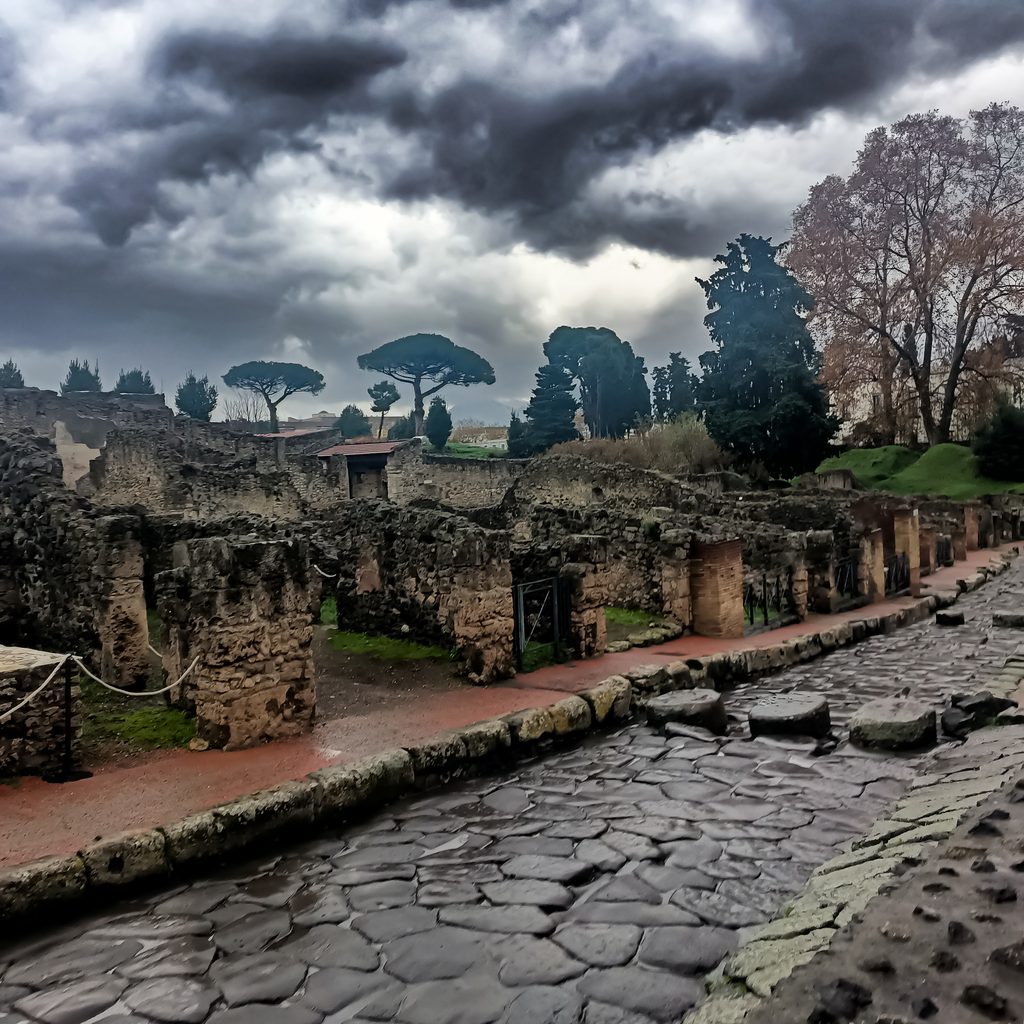
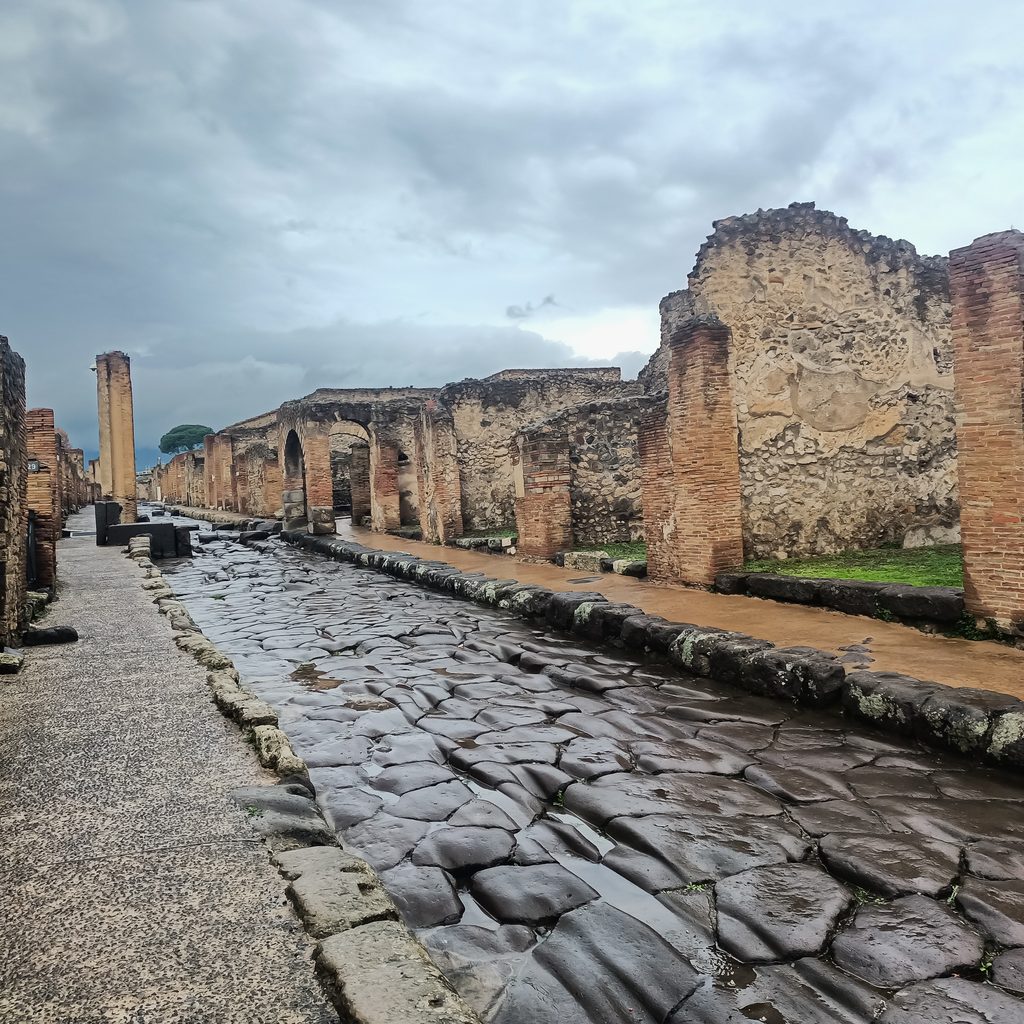
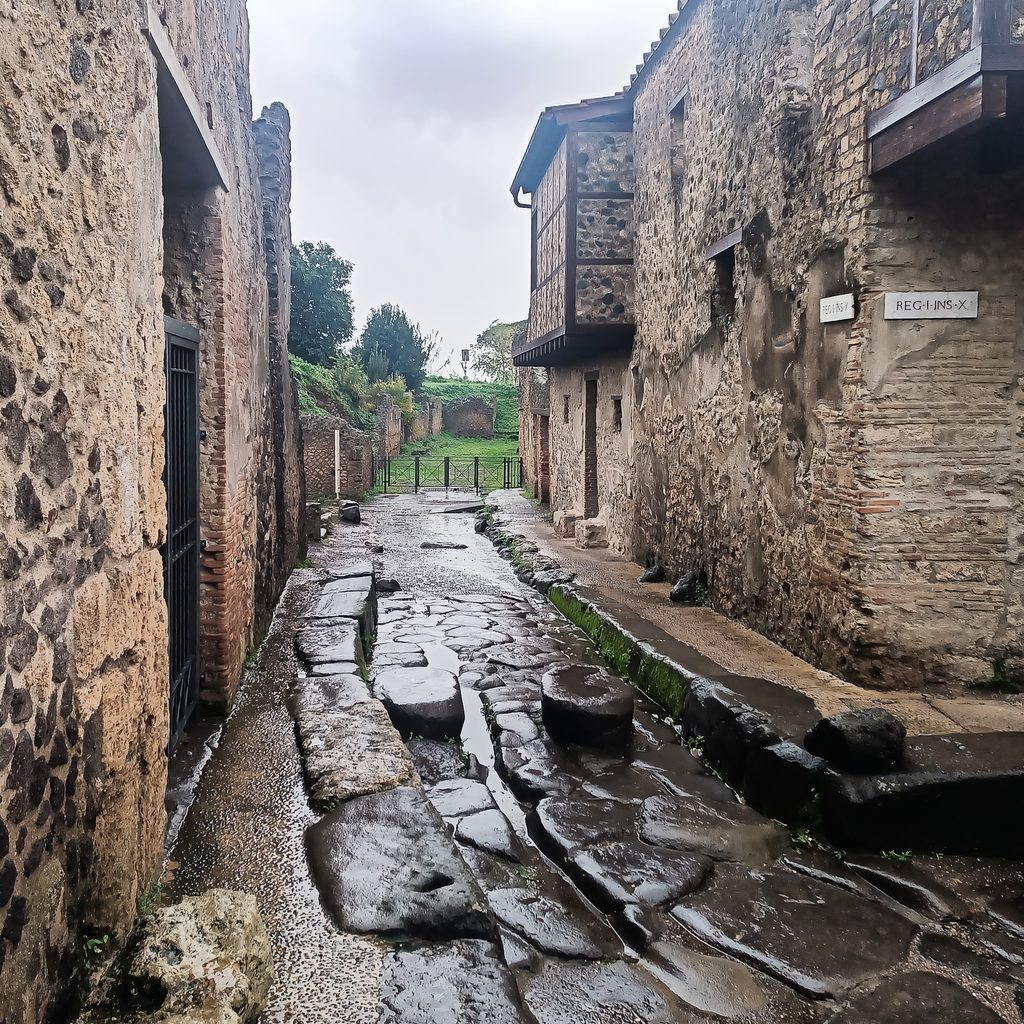
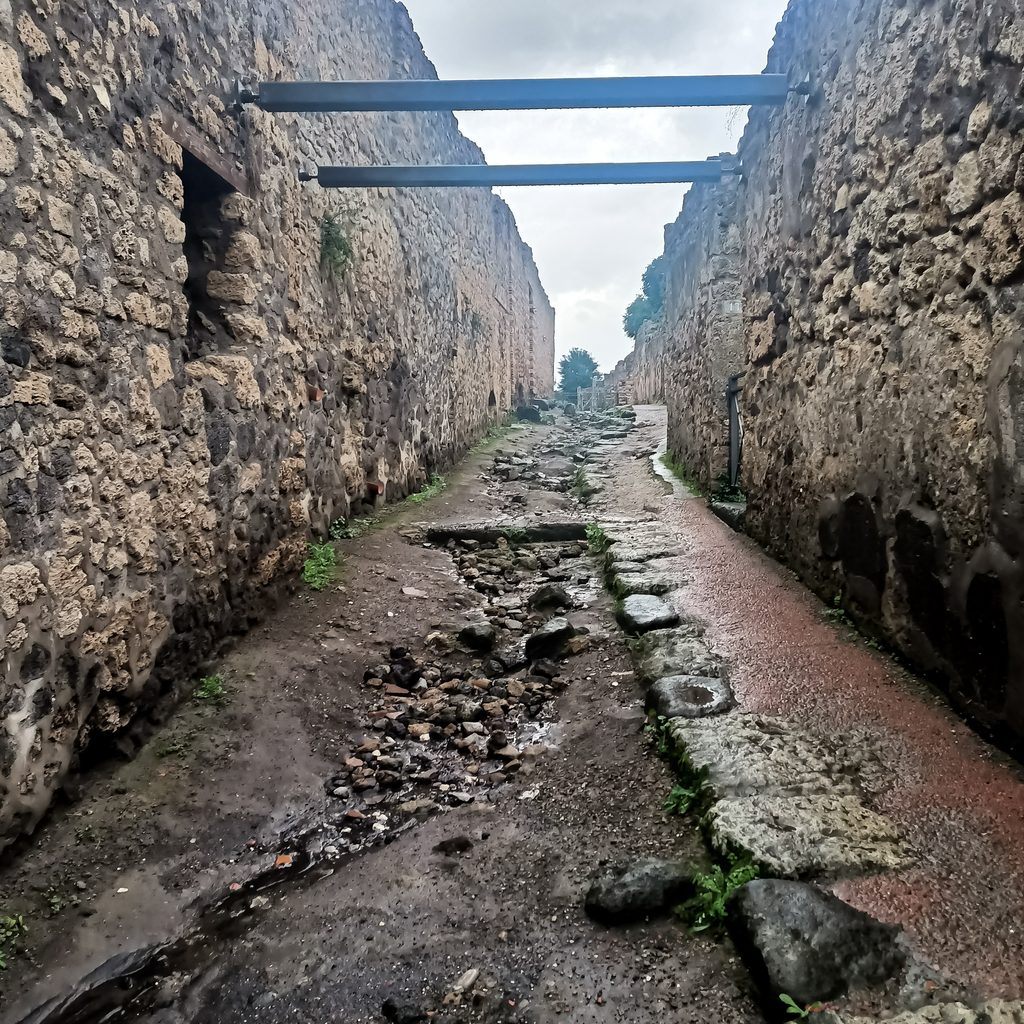
When visiting Pompeii, it is worth spending some time simply exploring the STREETS OF THE ANCIENT CITY. The stone paving, raised pavements and characteristic pedestrian crossings made of large stone blocks show just how carefully the city was designed. On both sides, you can see the remains of houses, shops and workshops, while the dense network of streets means that there is always another place worth stopping at just around the corner.
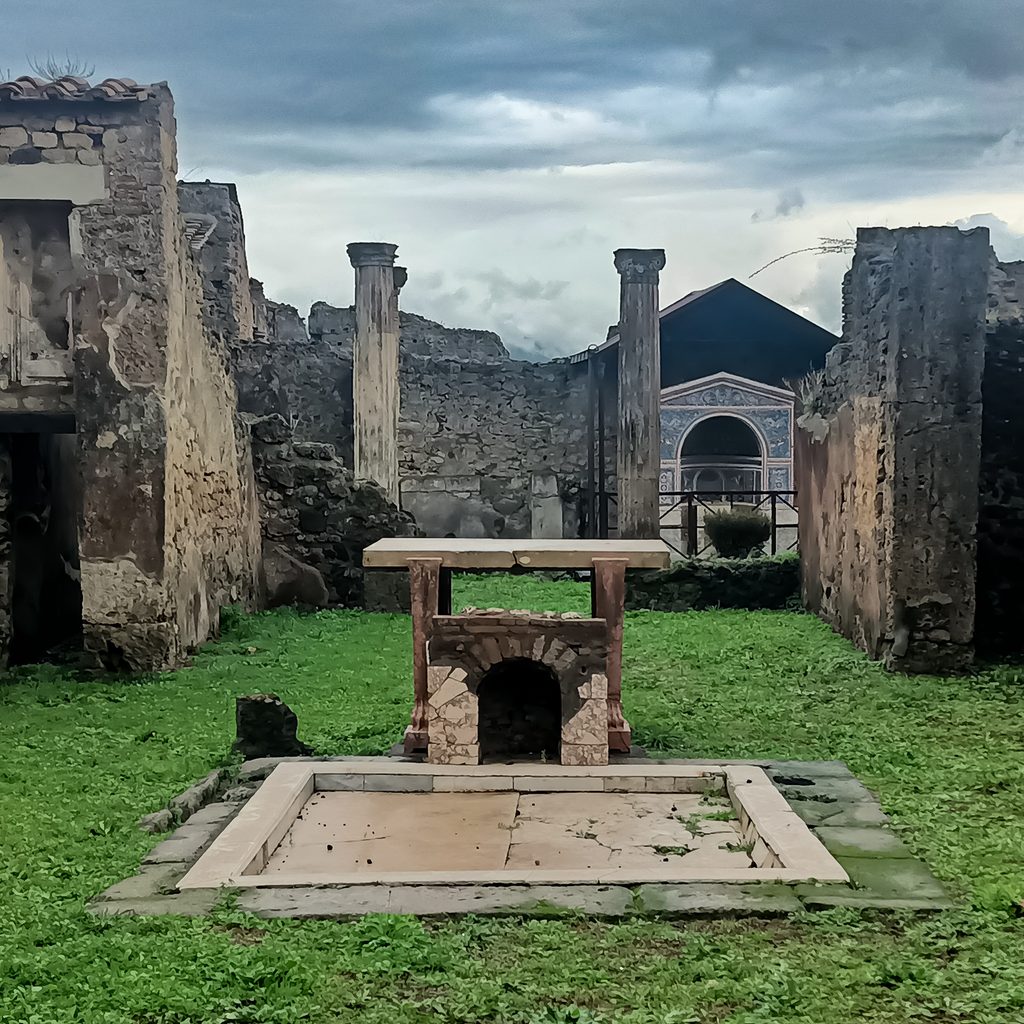
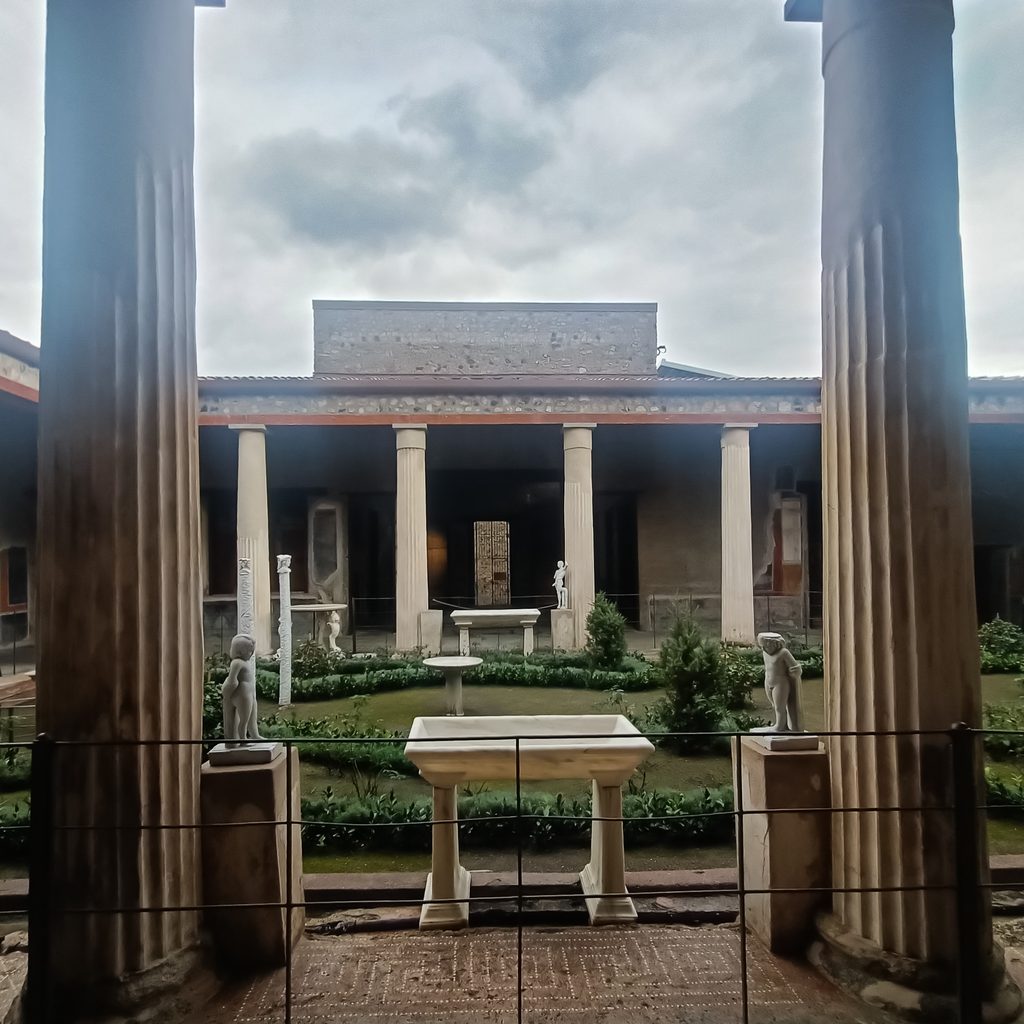
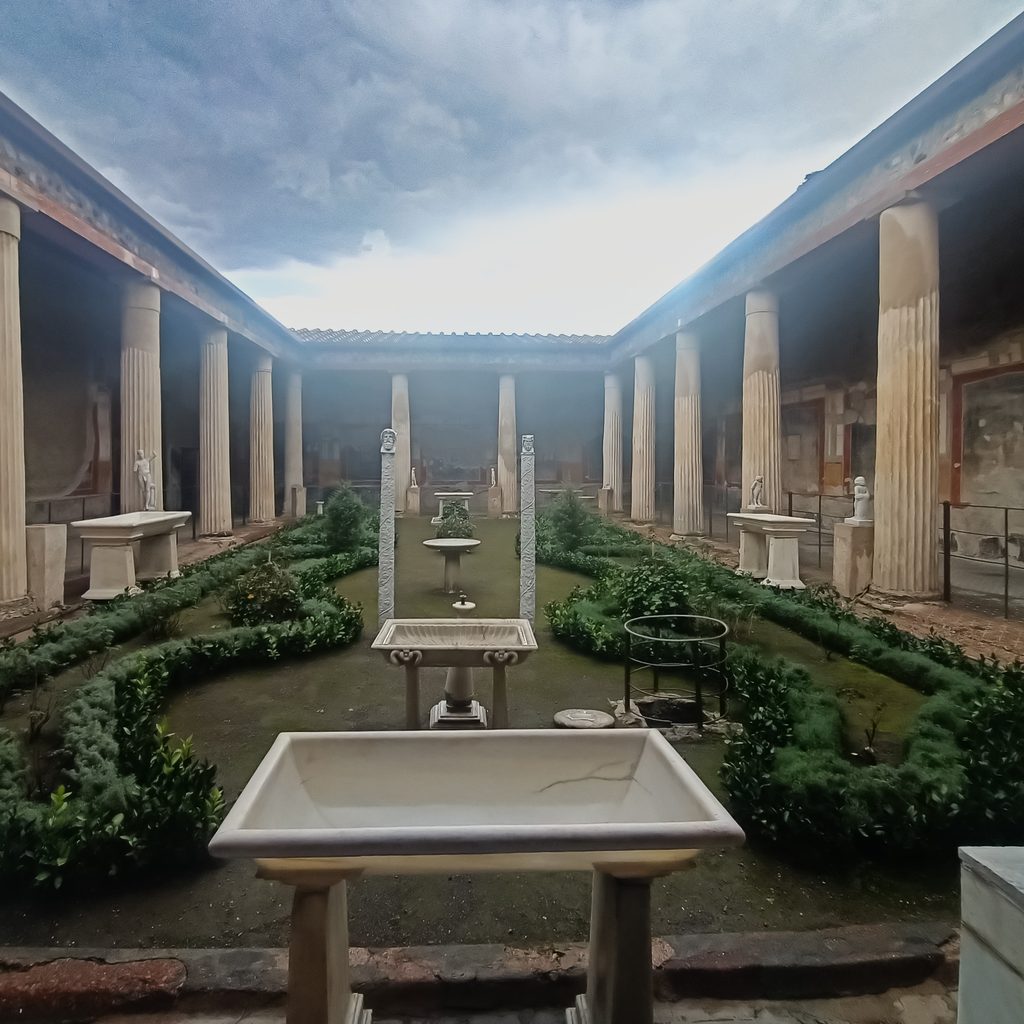
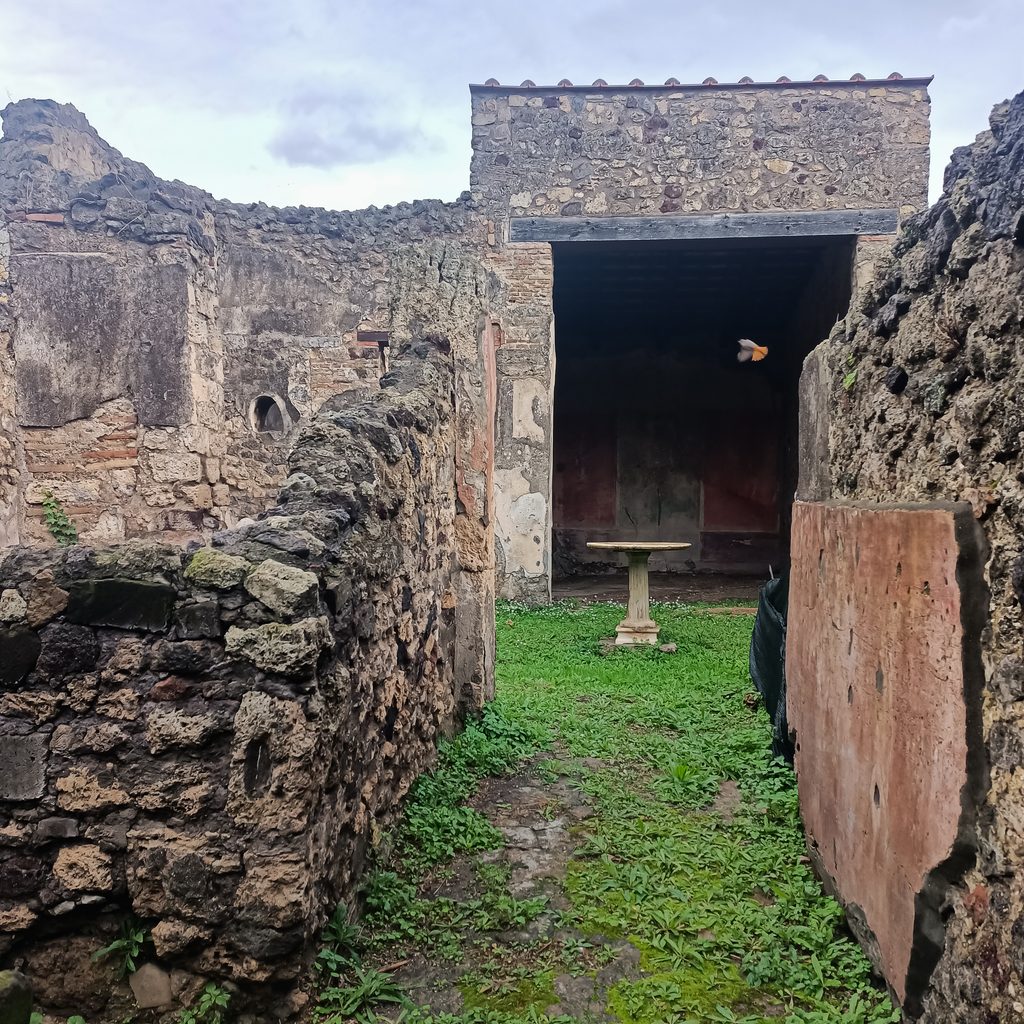
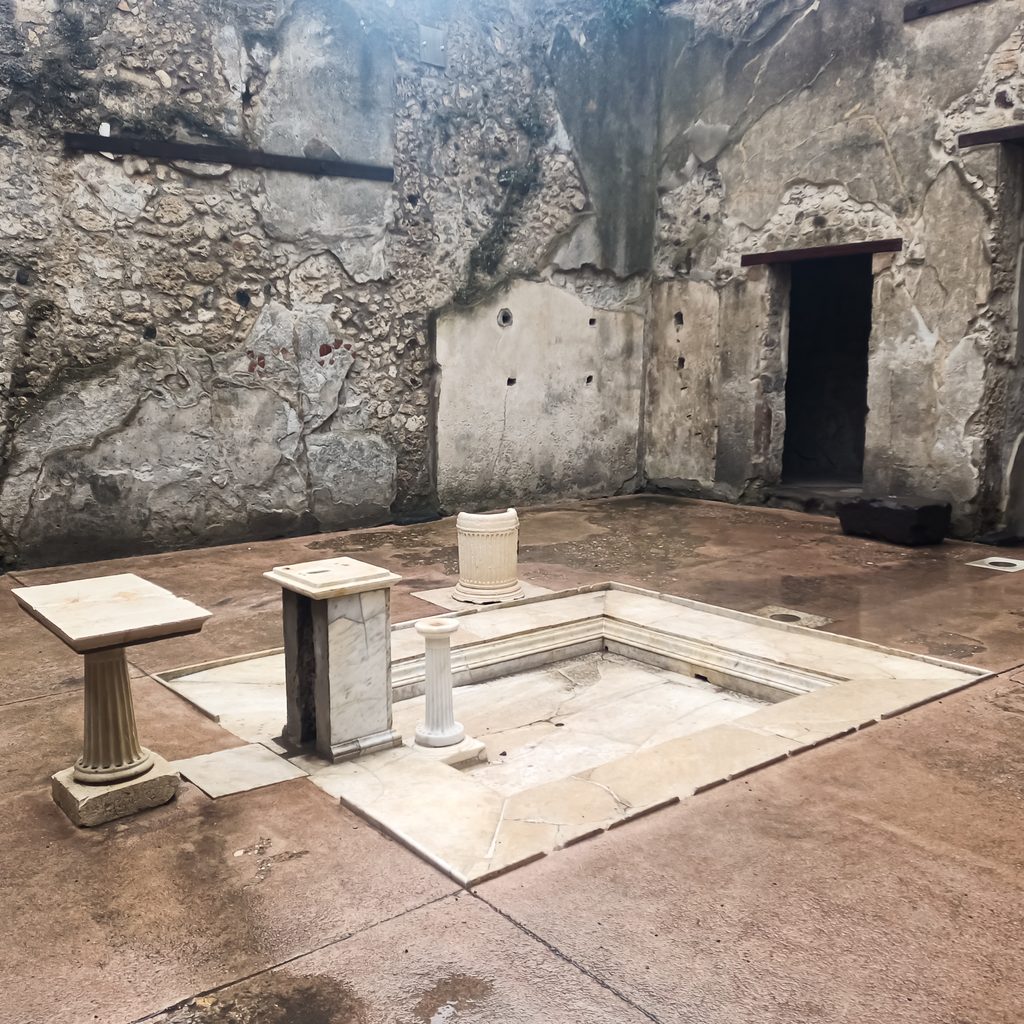
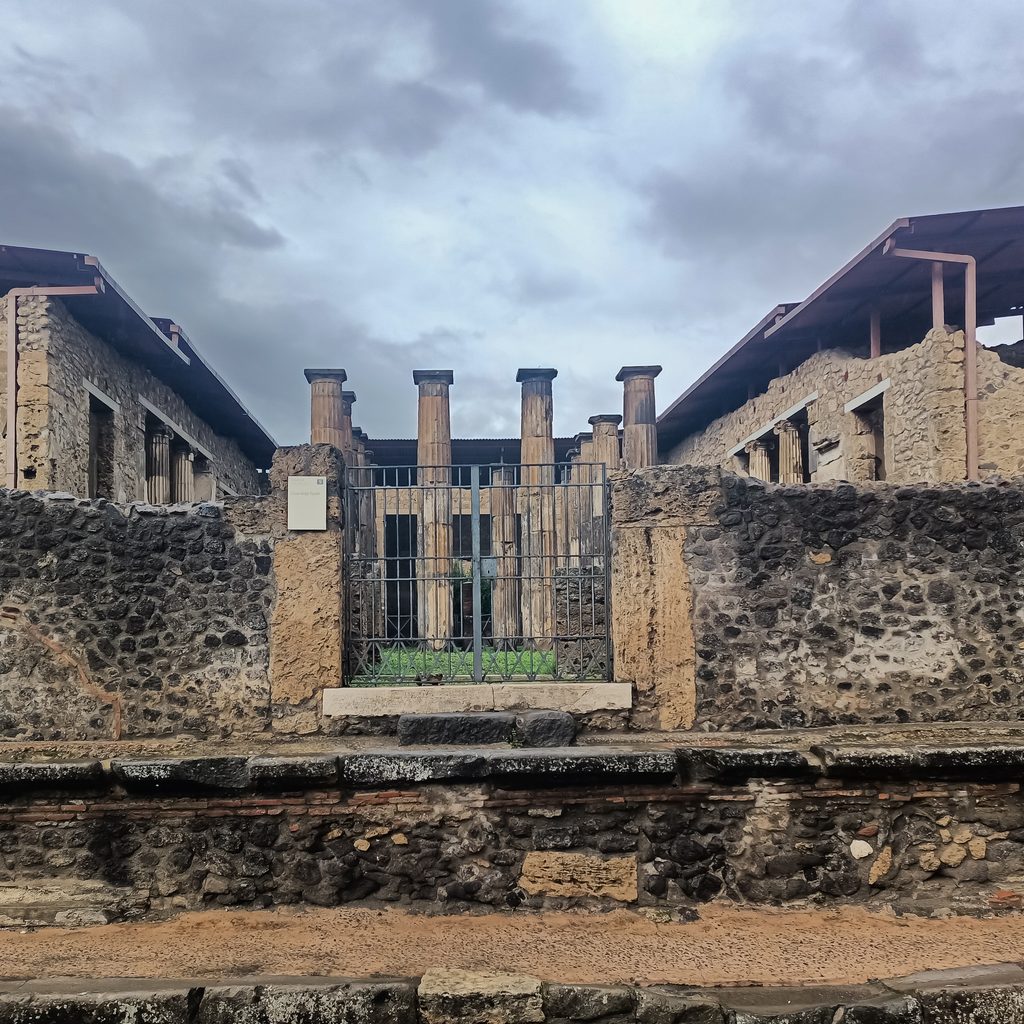
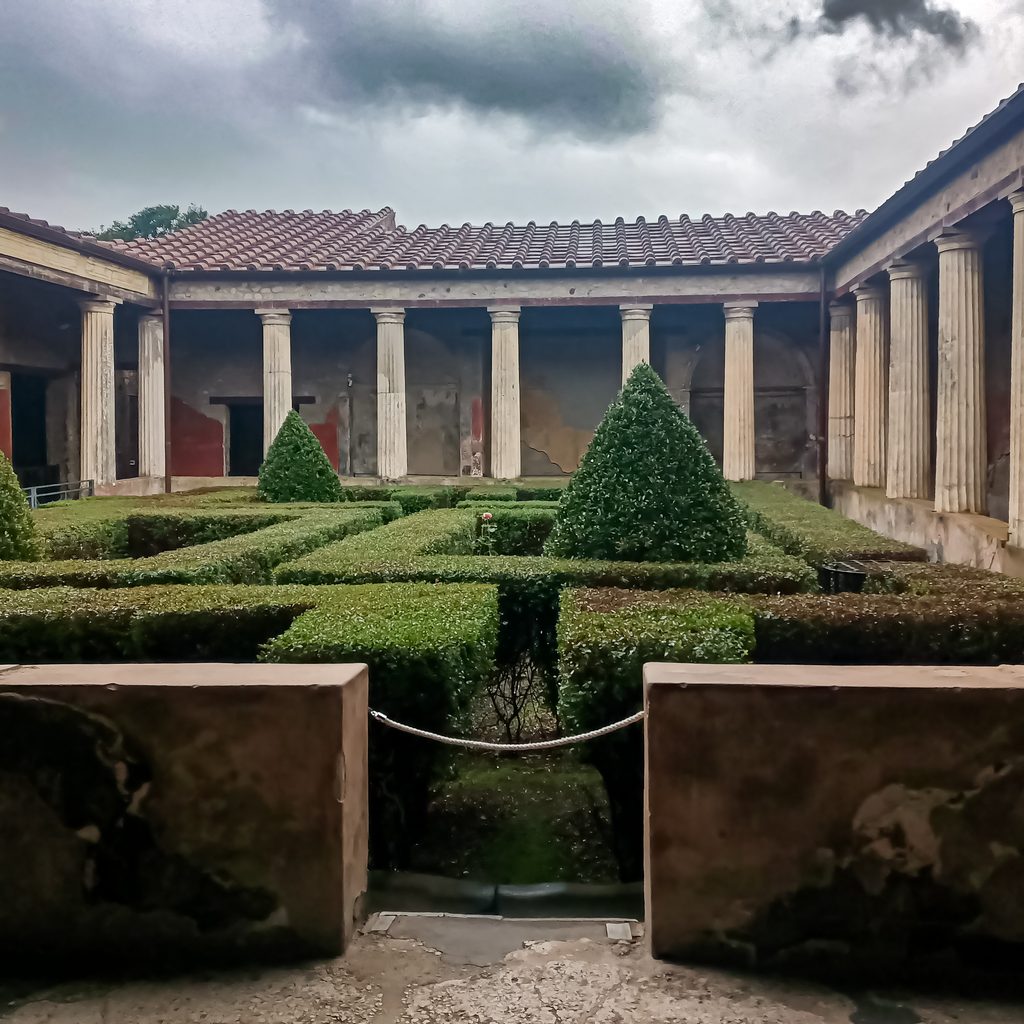
Some of the most fascinating places are undoubtedly the former homes of Pompeii’s residents. It is particularly worth visiting the HOUSE OF MENANDER, HOUSE OF THE VETTII, HOUSE OF THE FAUN, HOUSE OF THE TRAGIC POET and HOUSE OF VENUS IN THE SHELL. Many of them still preserve courtyards, colonnades, impluvia used to collect rainwater, gardens, as well as remarkable frescoes and mosaics. These places offer one of the best glimpses into the lives of Pompeii’s wealthier residents and show how much importance they placed on the decoration of their homes.
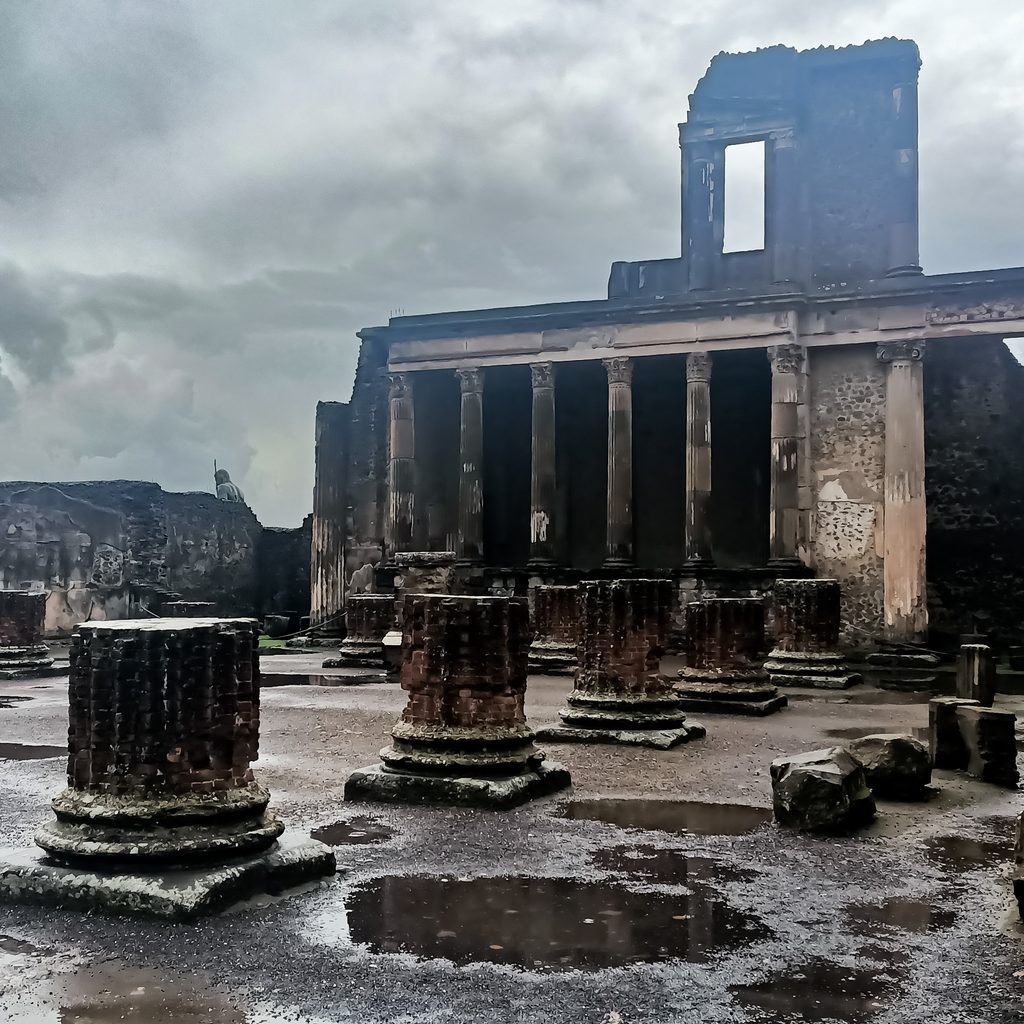
The city’s most important public spaces should not be missed either. The FORUM was the centre of political, religious and commercial life, and nearby stood, among others, the BASILICA and the TEMPLE OF APOLLO. It is also worth visiting the STABIAN BATHS, which show how important public bathhouses were in everyday life, as well as the AMPHITHEATRE, one of the oldest surviving Roman amphitheatres.
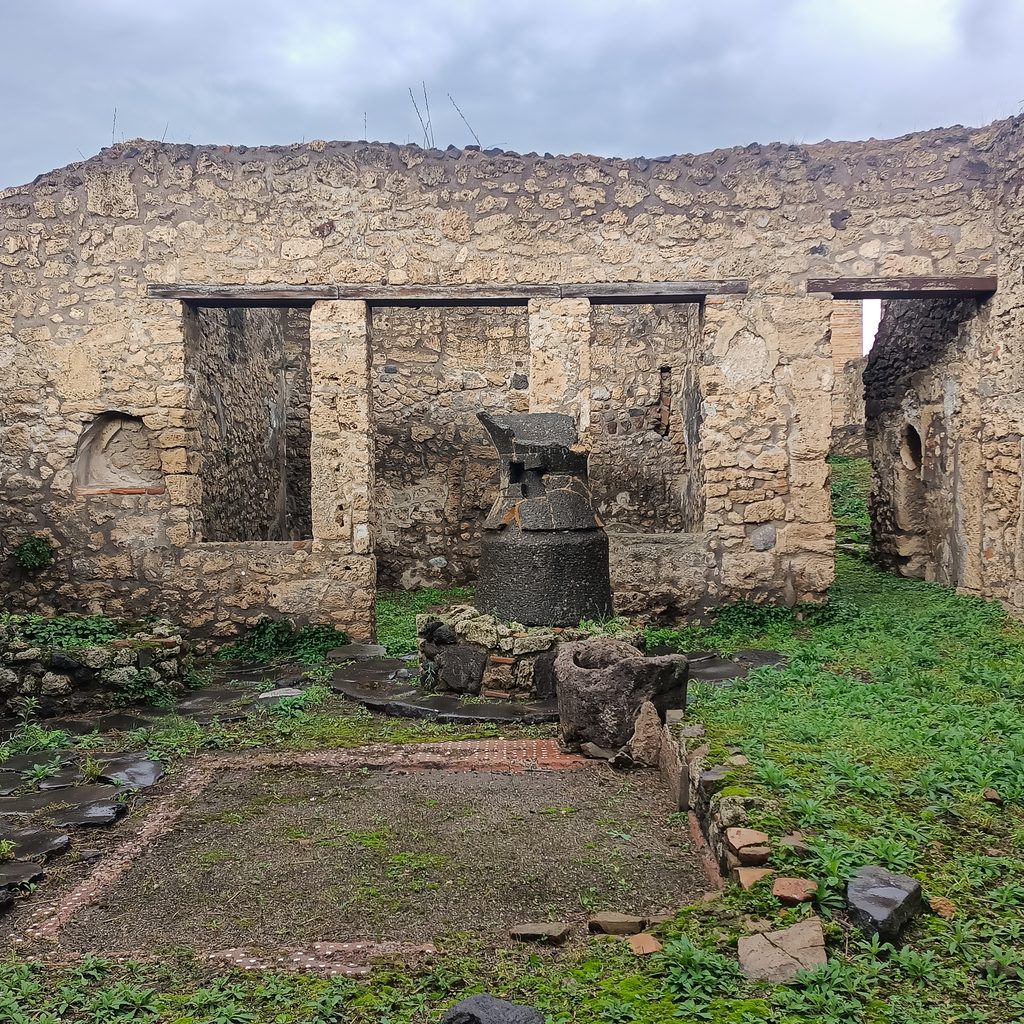
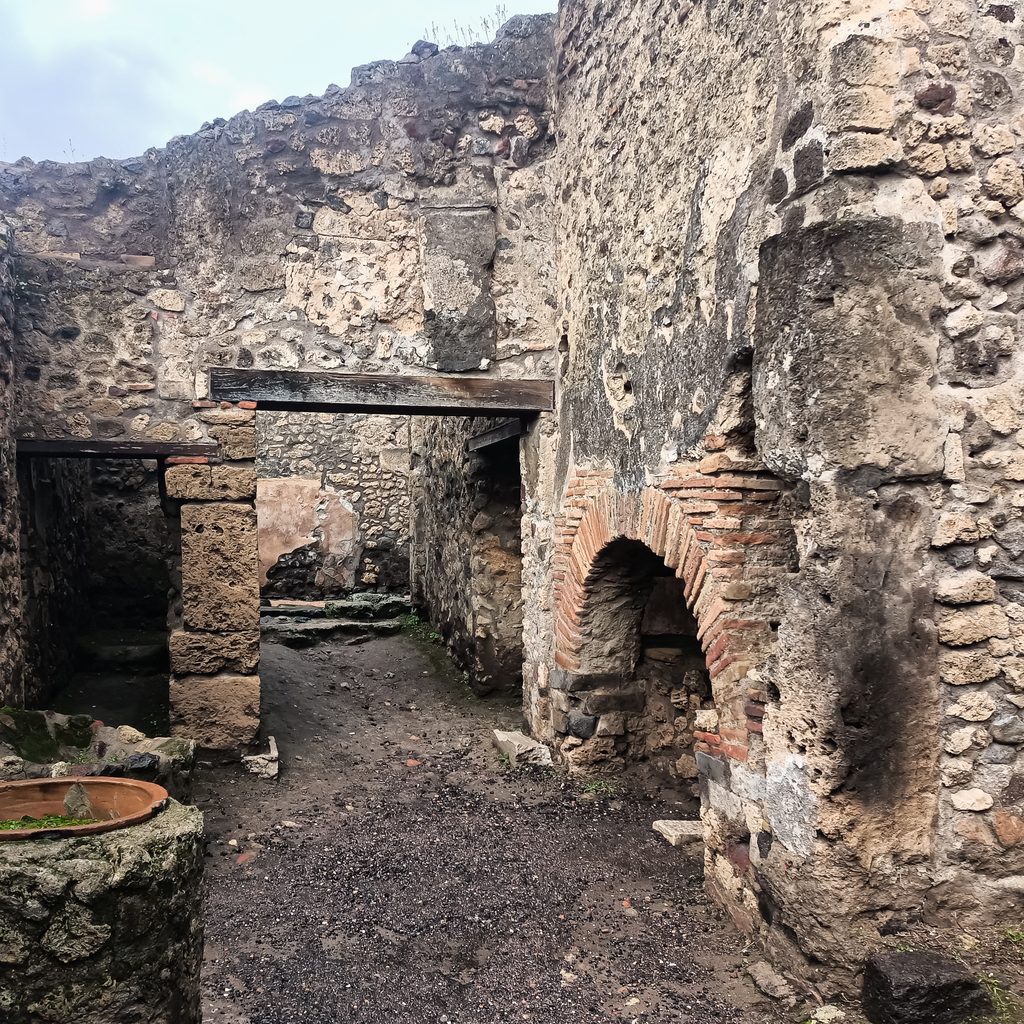
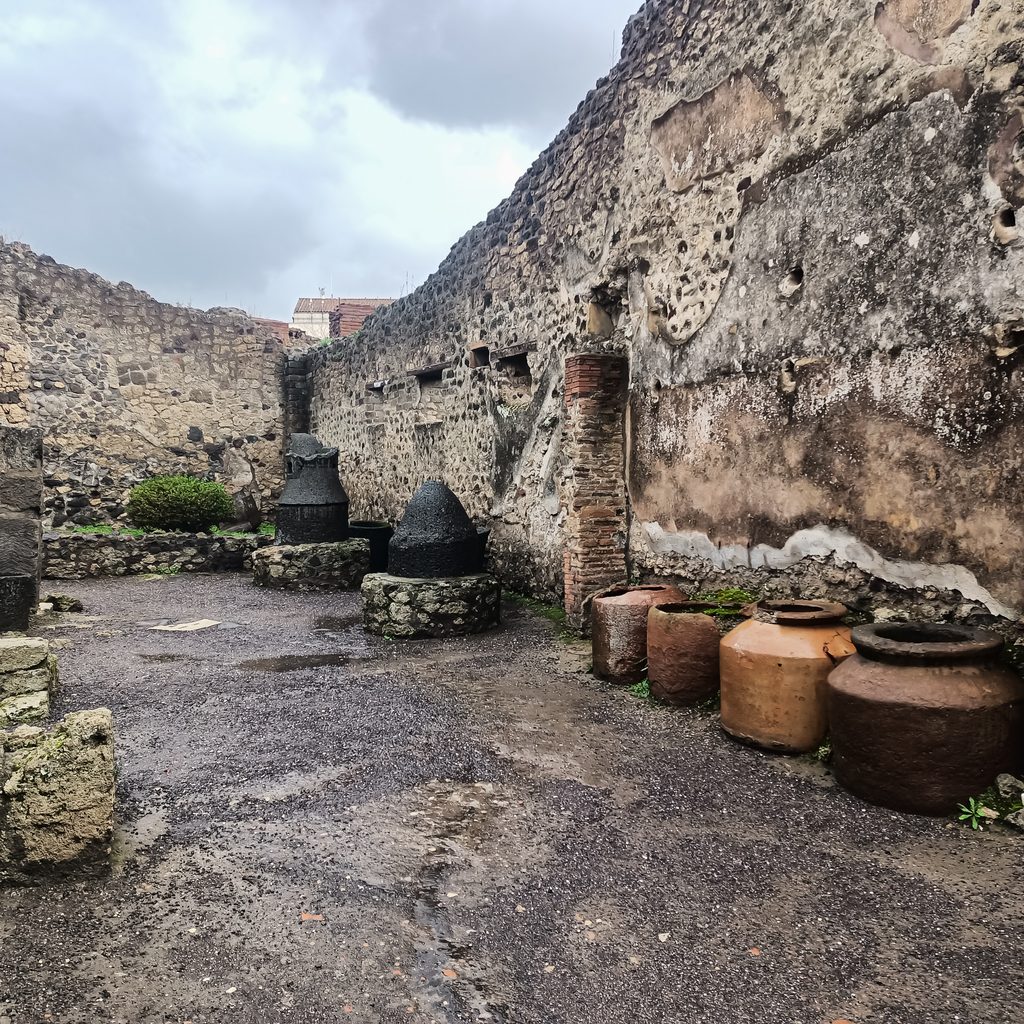
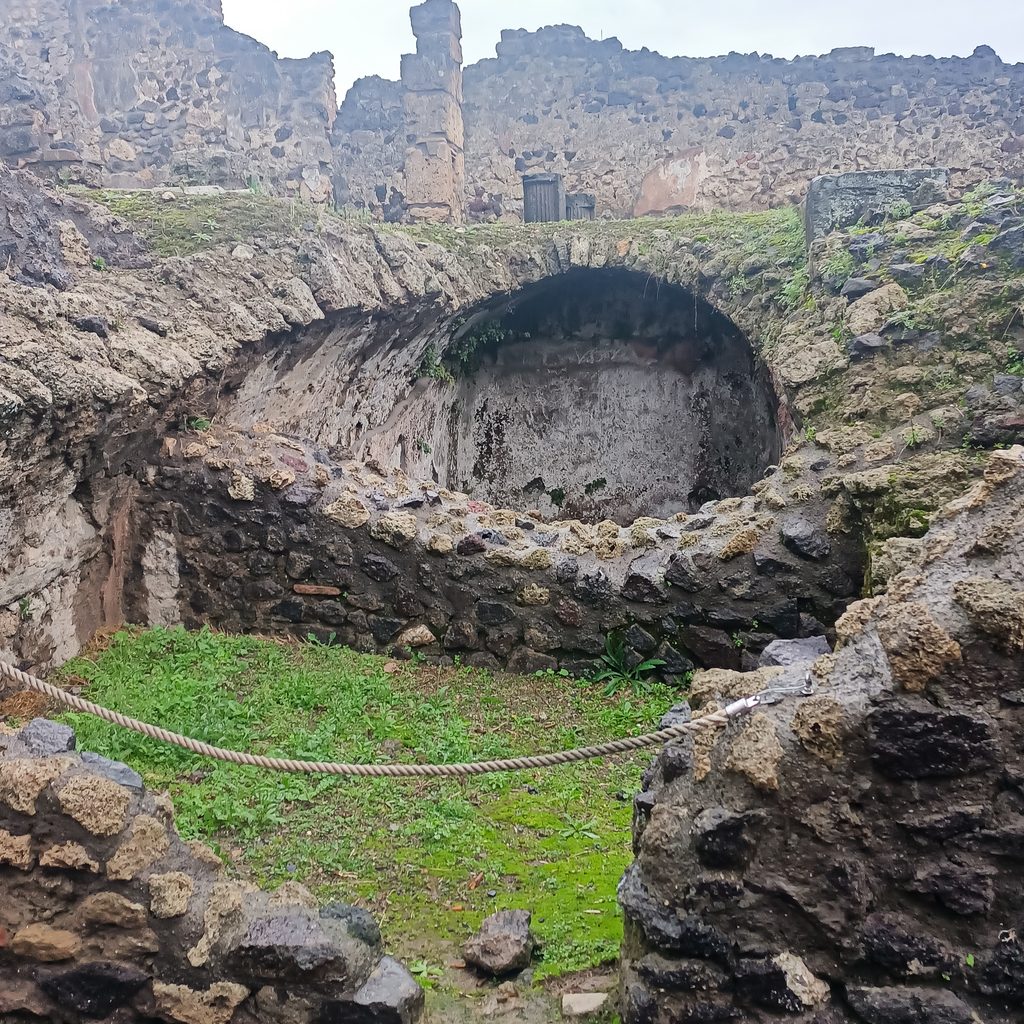
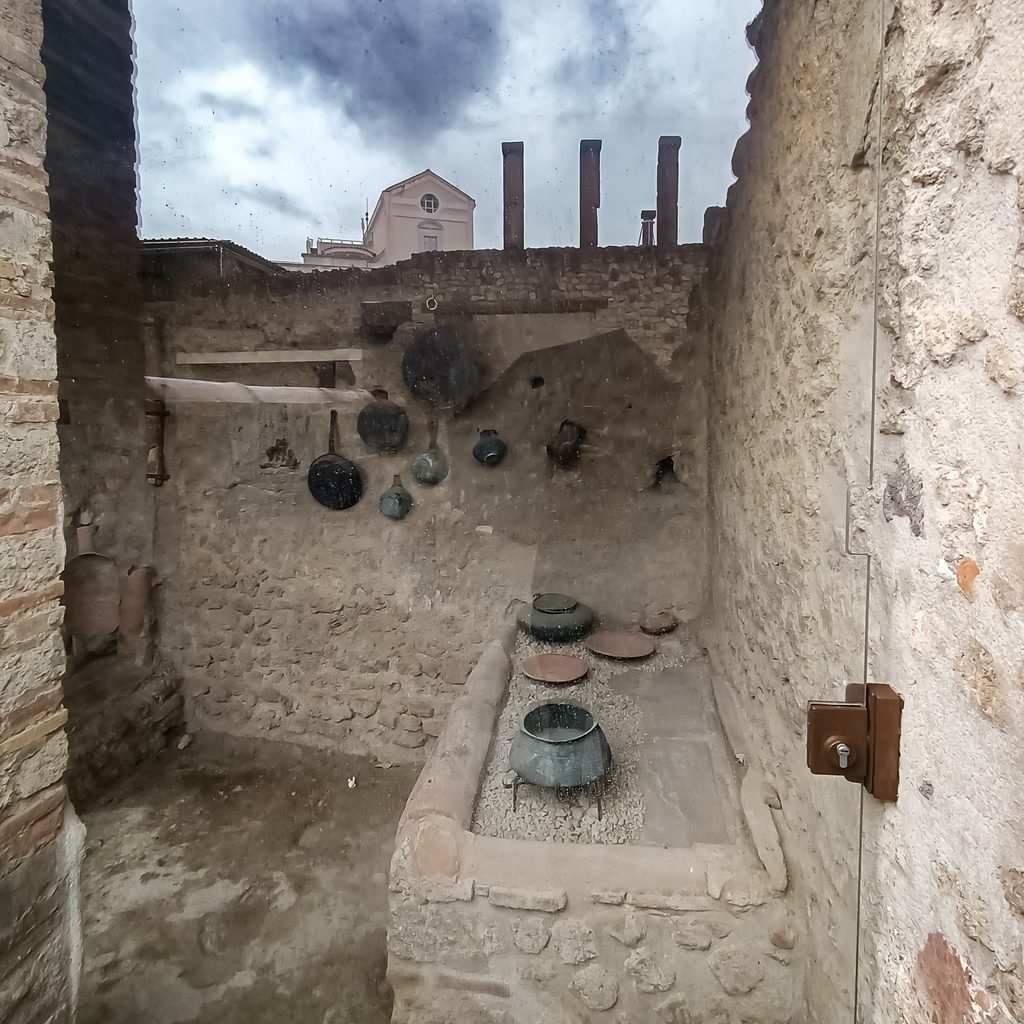
Pompeii also offers a glimpse into the much more ordinary side of everyday life. BAKERIES AND MILLS have survived, along with fragments of ancient kitchens, vessels and equipment used for grinding grain. You can also visit the LUPANAR, the city’s most famous surviving brothel. It is precisely places like these, along with the small details of everyday life, that make Pompeii much more than a collection of monumental ruins. At times, it really feels as though the people simply walked away and never came back.
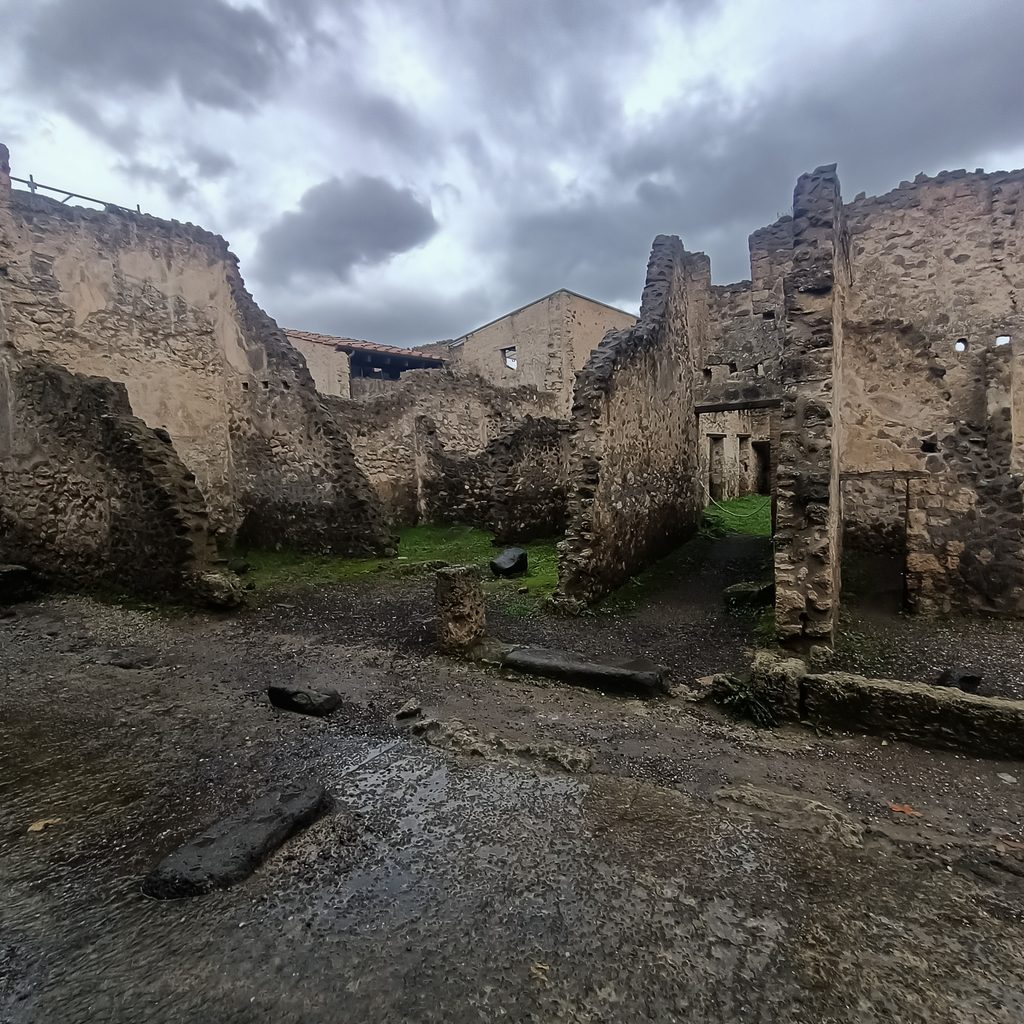
I would not, however, limit my visit only to the most famous places marked on the map. Pompeii is full of smaller HOUSES, COURTYARDS, GARDENS, ALLEYWAYS AND REMAINS OF WORKSHOPS that you can come across completely by accident. Many times, I turned into another street simply because something caught my attention. And I think this was the way I enjoyed discovering Pompeii the most — having a general direction, but still leaving myself enough freedom for spontaneous exploration of the city.
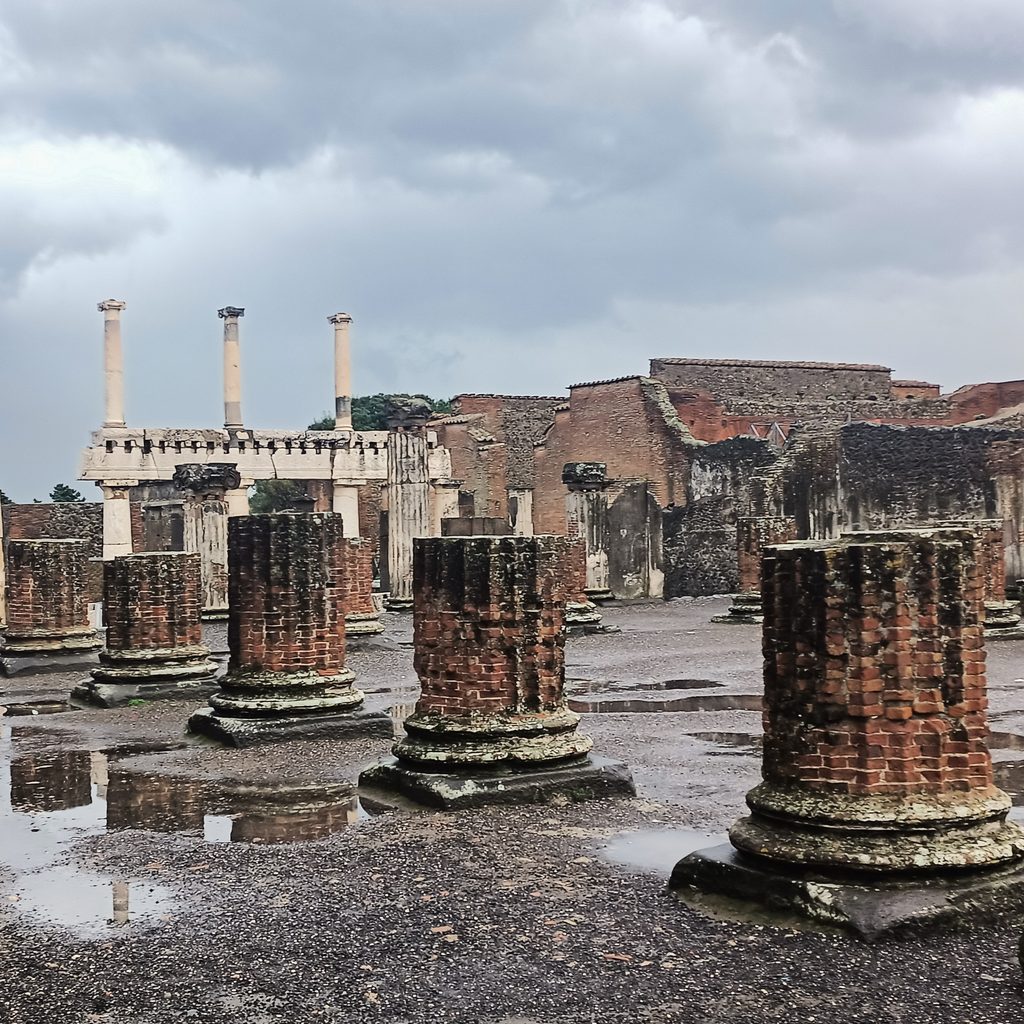
A BRIEF HISTORY OF POMPEII
The history of Pompeii dates back several centuries BC. The city developed at the foot of Mount Vesuvius, on the fertile lands of Campania, and thanks to its proximity to the sea and important trade routes, it quickly became a prosperous place. Over time, it came under Roman rule, and much of the architecture we can see today dates from that period. Pompeii had a forum, temples, baths, an amphitheatre, shops, workshops, bakeries and richly decorated houses. In short — it was a fully functioning city where people worked, shopped, met one another, enjoyed themselves and went about their everyday lives.
Several years before the disaster, however, the inhabitants received their first serious warning. In AD 62, the area was struck by a powerful earthquake that damaged many buildings. The city began rebuilding, but the work was never completed. In AD 79, Mount Vesuvius erupted with enormous force. The volcano ejected huge amounts of ash and pumice into the air, which began to bury Pompeii. Later, deadly clouds of hot gases and volcanic material swept through the city. In a very short time, a place where ordinary life had been taking place only moments before practically ceased to exist.
Paradoxically, the very way Pompeii was destroyed is what allowed it to survive in such an extraordinary state. A thick layer of volcanic material covered buildings, streets, frescoes, everyday objects and even traces left behind by the inhabitants. The city disappeared from the surface of the earth for many centuries and, over time, was almost forgotten. The first accidental discoveries were made towards the end of the 16th century, while regular excavations began in the 18th century. Gradually, entire streets, houses and places that no one had seen since ancient times began to emerge from beneath successive layers of earth.
One of the most moving reminders of the tragedy is the casts of the victims’ bodies. During the excavations, empty spaces were discovered in the hardened layer of ash where the bodies had decomposed. In the 19th century, archaeologist Giuseppe Fiorelli began filling these cavities with plaster, making it possible to recreate the positions in which some of the inhabitants died. This is probably one of those moments when the history of Pompeii stops being just a story about an ancient city and suddenly becomes the story of real people.
Even today, we do not know everything with absolute certainty. For many years, 24 August AD 79 was accepted as the date of the eruption, based on surviving copies of letters written by Pliny the Younger. Archaeological discoveries — including autumn fruits, clothing and an inscription found at the site — have led many researchers to believe that the eruption may actually have taken place in autumn, probably in October.
FROM A TRUCK DRIVER’S PERSPECTIVE
Visiting Pompeii from a tourist’s perspective begins with choosing a ticket and finding the entrance. From a truck driver’s perspective, it starts much earlier — with finding a place where the entire rig can be parked legally and safely. In my case, that was not so simple. Scafati is full of restrictions for heavy goods vehicles, so I had to study the route very carefully, not only to the parking area but, above all, from there to my unloading point afterwards. In the end, I managed to find a suitable route, although I now know that Scafati is much easier to reach from the motorway running north of the town. I deliberately chose to approach from the Pompeii side because I wanted to use my free weekend to visit the ruins.
Safety was equally important to me. The Naples area has a reputation as a place where it is worth choosing your parking spot carefully if you are leaving a truck for a longer period. The petrol station I chose was monitored, so I parked the rig in a position where one of the cameras had the best possible view of it. I also noticed that a police patrol appeared in the parking area quite frequently. I spent the entire weekend there, slept normally in the truck, and during that time nothing happened that made me feel concerned.
The biggest advantage of this place, however, was its location. I could leave the petrol station on foot without any problem, and the entrance to the Pompeii archaeological site was only about one kilometre away. When travelling by truck, that kind of setup is almost ideal — the rig stays in a safe place, while one of Italy’s greatest attractions is within easy walking distance. You just need to remember that in Scafati it is really worth planning your truck route carefully in advance, because a spontaneous “I’ll somehow find my way there” can very quickly end with a wall of road signs banning trucks.
WAS POMPEII WORTH VISITING?
Definitely. Especially because I am not someone who gets excited about every set of ruins simply because they are old. Usually, I see them more as the remains of buildings, stones and fragments of former architecture. Pompeii, however, was completely different. Here, I did not feel as if I was looking at isolated ruins, but rather walking through a real city that suddenly stopped functioning. The streets, houses, frescoes, courtyards and objects left behind make the history feel surprisingly tangible.
The weather also decided to add something of its own. Towards the end of my visit, I was caught in a heavy downpour and returned to the truck completely soaked. So I could say that I remember Pompeii not only because of its history, but also because of the water pouring from the sky. Even so, I did not regret for a moment that I had decided to go there.
Pompeii turned out to be one of those places that genuinely surprised me. I went there mostly out of curiosity and because I happened to be so close, and I came back feeling that I had seen something completely different from most of the ruins I had visited before. If I found myself in the area again, I would visit Pompeii once more without hesitation. The site is enormous, and during a first visit there will always be something you wish you had spent more time on, or a place you would like to return to.
GALLERY

DISCOVER MORE
ZUMAIA – EXTRAORDINARY CLIFFS OF THE BASQUE COUNTRY
Discover the extraordinary cliffs of Zumaia, walk along the Basque coast and find out why this place can captivate you whatever the weather.
MALEVAL – A FRENCH VILLAGE FULL OF CHARACTER
Discover a small French village that I came across during one of my truck routes, and see its stone buildings and peaceful, authentic atmosphere.
ÖREBRO – SWEDISH CHARM WORTH DISCOVERING
Discover a peaceful Swedish city I came across during one of my routes and see why it is sometimes worth stopping in a less obvious place.
Join the conversation